Saturday, February 11, 2012

Maintaining Those Mini Twist (Maximizing your Style)

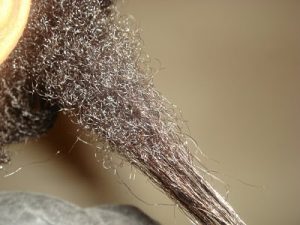
Putting mini twists in my hair is usually a four to five our commitment over the course of a weekend. So once I have them in I try to maximize the wear. How do I get five weeks from one protective style? I'll tell you.

• I twist tightly keeping my finger close to where I am actually twisting. This forms a strong twist that is able to hold itself together.

• I only use leave in conditioner, natural oil, and flaxseed gel to put the twists in.

• I stop twisting when I am tired and pick up when I have energy so my twist look consistent.

• I use only two products to maintain my hair (Shea butter at night) (diluted kinky curly spiral spritz in the morning).

• I moisturize (daily) by adding water to my hair prior to adding any product.

• I use the Shea butter to massage my scalp nightly.

• I sleep in a satin bonnet.

Week Five I wear a twist out. The day before I am going to wash my hair I prepare my hair using a deep treatment of coconut oil. I ware a plastic cap under my satin bonnet. The next day I shampoo and condition.

I have a new video on YouTube here demonstrating my  (mini twist) am/pm routine! Please subscribe rate and comment.


Blessings,

CurlDiva

Sunday, January 8, 2012

The Five W's of Protein Sensitivity

Protective Style Hair Band
Having naturally curly hair has been a challenge like none other in my life. As a professional woman I have received the disappointing looks and heard words from brothers I don't care to repeat. I've chopped, colored, grew out, and chopped again. In my 8 years of being natural, nothing has been more challenging then finding what makes my hair happy. When my hair was relaxed I loved the silkiness of clean, conditioned hair but finding that same happiness for my curly locks has been a quest that would discourage the Indiana Jones. Recently I learned that my hair is protein sensitive. I found this out when I tried Carol's Daughter Herbal Tui shampoo (my normal CD shampoo had been sold out for weeks). This shampoo left my hair tangled, matted and straw-like. It took me three months to recover. Little did I know the very products that were supposed to help me actually were hindering me because they too contained protein. The following list is the 5 W's of protein sensitivity:
  1. What- What does protein sensitivity look like? In laymen's terms, it is when the hair's response is a dry, straw like feeling. Hair is typically unmanageable and feels as if it has not been conditioned at all. 
  2. When- One can tell when one is protein sensitive once one's hair is in a natural and health state. When hair is relaxed, colored or damaged by heat exposure protein can be loss and the hair may be more receptive to protein treatments.
  3. Why- Why does curly hair resist protein? The best answer I have found is because curly hair makes so much of its on protein that protein treatments tend to send it into a frenzy. Too much of  a good thing can be bad.
  4. Where- Where is protein found? In shampoos, conditioners, and moisturizers. Commercial and organic products both can contain proteins and the only sure way to know is to read the label of ingredients. It is a good idea to take your smartphone with you to Google any ingredients you are not familiar with. 
  5. Who- Is susceptible to protein sensitivity? Anyone who has coarse high porosity hair but some women with fine hair have also reported protein sensitivity to specific types of protein. For example one may be able to tolerate soy but not silk protein. 
Prayerfully, this has been an informative blog :)
Blessings,
CD

Monday, December 5, 2011

Breakage...The Best Treatment

It happens to the best of us, whether we co-wash, pre-poo, deep condition, or go organic breakage is can still occur. While many articles address how to prevent breakage I haven't seen a whole lot of discussion on what are the major culprits that cause breakage. There are the obvious offenders, heat damage, chemical damage and dryness but there are also internal factors such as hormone imbalance, dehydration and even stress. In addition wearing braids-while categorized as a protective styles- can also contribute to the demise of healthy hair.

So how does one treat and stop the hair breakage cycle? The best treatment is only as effective as the appropriate diagnosis of why hair is breaking.  Determining why your hair is breaking is the initial step in determining the best way of treating your hair. Here are some basic qiuestions to ask when trying to determine why your hair may be breaking.

First look at where your hair is breaking? Is is the edges, the crown, where your new growth is? Is it just one of the four quadrants? Around the crown could be an indication of stress and/hormonal imbalance. Edge thinning and breakage is often result of pulling hair too tightly away from the face (braids, ponytails, high-puffs, etc.) If the breakage is in a quadrant it could be an indicator of applying heat to the same section first every time you press.

Then look at the condition of hair that is not breaking closest to the hair that is breaking.  What are the differences in texture and length? Is this hair more or less dense? Because we have combination hair we have to often condition our hair based on the thickest and most dense hair type we have. Fine hair needs are different from coarse hair needs.

What is the overall condition of your skin? Yes, your skin? Is it dry, oily, or combination. Does the skin around your eyes look tight or rested? This is the primary indicator of mineral deficiency and dehydration. Healthy, hydrated hair is like healthy hydrated skin; it glows.

If you are transitioning hair is prone to breakage because the chemically processed hair is weakened and often stressed as a result of the different textured hair making its way on the scene. Combat this fight by encouraging your straight hair to act like the curly hair. Do rod or straw sets and two strand twist with a moisturizing gel such as Ecostyler, which has a medium hold and is alchol free. 

Remember the key to treatment is proper diagnosis!

Blessings,
Curl Diva

Saturday, December 3, 2011

Kinky Curly What's your type?

No matter what blog or discussion board you go to, the same question comes up. "What's my hair type?" There are several systems of determining hair type and perhaps the most renowned is that established by hairdresser Andre Walker-Oprah's Beautician. For the the past four years I have been "courting" off and on, a shampoo and conditioner made by Alafia. It's all organic and can be found at your Local Whole Foods Market. I wasn't too thrilled when they expanded their line and changed their formula (they even renamed it Beautiful Curls) BUT I did like the chart they provided to help determine your hair type and compatible hair products t and I bought the shampoo and conditioner anyway. Beautiful Curls Care Guide 

Two reasons I like(d) this product:
Organic Hydration and Wonderful Citrus smell.

Biggest complaint:
Whole Foods Market is 45 minutes away :(

I plan on doing a product review on the new line really soon. Check back often or visit me on my youtube channel.


CurlDiva

Wednesday, November 30, 2011

Mini Two-Strand Twist (Protective Style)


Micro in the front and Mini in the back
 Winter is here and that means that my wash and go has been tucked away until Spring returns. In the meanwhile, I have unpacked the protective styles of winter.

This past Thanksgiving Weekend I washed my hair with a Shea Moisture Reconstructive Shampoo Condition Mix. My hair rejected the idea of Shea Moisture (again) so I think it may be tired of this particular product. Sigh~ So I used the Shea Moisture Deep Conditioner just to make sure it wasn't just dry but my hair didn't like that either. I ended up leaving it on about an hour before washing it completely out. I couldn't even detangle with it. I then added about an oz of  Kinky Curly Knot Today (KCKT) and 1 oz of almond oil to my sectioned off hair and detangled. Using a blow dryer and a paddle brush I straightened hair section by section. Once hair was straight I began twisting very small sections from the nape working my way up. Once I got to the front I divided the section size in half making micro twist. In the front I was also careful to use a rattail comb to make clean parts because that is what people see. I twisted using my Pomegranate Mango Whipped Shea Butter. I snipped ends that looked raggedy (frayed) less than a 1/4 inch.

At night I sleep with a satin bonnet on. In the morning I refresh with Shea Moisture Coconut Habiscus Spray. Every other day I oil my scalp with Whipped Shea Butter. My scalp tends to itch more when it is exposed.  The picture above is second day hair of the finished 3 hour process. Don't be intimidated by time when it's the care of your hair and if you have little ones like I do...you know there are plenty of interuptions. Remember this...You're worth the investment!

CD

Friday, November 11, 2011

Some throwbacks should be left back!

Grease is making a comback?!?

Okay, so we all remember those days of sitting between someone's legs having our hair braided and our scalp "greased." It seems as though some of the hair naturalists who originally avoided "grease" like the plague are now returning to the roots of our grandparents. Some hair naturalistas are even arguing that "grease" of old is comparable to modern day hair butters.  What? Really?

Well, being a teacher I thought I would dispel that argument. So here is my case AGAINST grease and FOR Butter and how the two are different.

The traditional goal for using butters or "grease" has been to moisturize the scalp. The scalp is skin and there is essentially only one way to effectively hydrate it; that is from the inside out. Drink plenty of water. The skin can absorb some moisture but that happens only at the surface level (the epidermis). As you can see from the diagram the root of your hair is far below the dermis where moisturizers do not penetrate.  In order for any moisture to be absorbed into the skin it has to penetrate the pores and enter the dermis. These molecules must be very small to penetrate the . pores. Skin by design is created to protect our bodies from toxins and keep moisture and heat in. Most often what happens is a smal amount of the what are skin comes in contact with may pass through  and enter the body but most often lotions and creams merely rest on the skin forming a barrier. This can create the allusion of moisture but often it's temporary and when one takes a bath the barrier can be broken down or washed away.  With that said there is no scientific way to determine if what you put on your skin will be asborbed (beneficially or harmfully) into ones body; despite what the beauty industry may claim.

Most ingredients found in typical grease have a toxic affiliation as the base. The main ingredient in Blue Magic and other "grease" is patrolatum which is the source of both kerosene and gasoline. In at lease one country (EU) this has been banned because of its link to breast cancer. Petrolatum is a nonregulated chemical and therefore there is no information available on how much of it (if and when it is absorbed) is toxic to the body. It is stated as being harmul when ingested. According to http://www.cameochemicals.noaa.gov/chemical/12302 Patrolatum has no reaction to water which suggests to me that it cannot be absorbed in the skin to create moisture.

Butters are different in the fact that they are usually derived from natural sources that are proven to cooperate with water and have beneficial properties for skin, hair and health. The most common bases of butters are shea, cocoa, mango (bases are the first ingedient on the product's list). In hair butters beeswax may also be included. All of these ingredients are derived from nature and have proven beneficial components that can be absorbed safely by most users (everyone has differentiated allergies).

In the case of going back to grease...I suggest we make that throwback a thing of the past.
CurlDiva

Thursday, November 3, 2011

Condition Wash Condition...not really anything new

Today, I read an article that talks about an alternative to co-washing. It's been called the condition wash condition method. For me it's not really anything new. I use this method when my hair is dry (straw like). I discovered this method quite by accident when I had a bad experience with a Natural Shampoo that completly stripped my hair. This method entails the following (flexible) method:
  1. Wet hair with warm water smoothing in one direction. (Usually I am in the shower so away from the forehead). Hair should be saturated.
  2. Apply a deep conditioner. All the conditioner to sit on hair while you shower.
  3. Apply shampoo (leaving conditioner in) work through hair the same way you applied the conditioner. (At this point I generally finger comb or use a very wide tooth comb).
  4. Rinse out both shampoo and conditioner. Working from forehead to nexk.
  5. Apply a good leave in conditioner andfinger comb to ensure hair is detangled.
* Before I apply the final leave in conditioner I generally add a quarter size amoun of almond oil from root to tips.

This is my method as I mentioned before this method can be tweaked to your hair. I find this method allows my hair to be less tangled and I can maximize moisture as well.